Dressing for a Kirkenes king crab safari in any season
Both king crab safaris in Kirkenes hand you the heavy outer layer, so you do not need to pack a survival suit. What you wear underneath decides whether three hours on the fjord feel fresh or miserable. A few small things in your pockets help too.
What the operator hands you at the start
Snow Resort Kirkenes kits everyone out before the trip begins. For the summer RIB trip the pier is where you collect floating overalls and a life vest. Mittens and a balaclava are part of the loan, and a safety briefing follows.
The winter listing names a thermal suit with boots and socks. Mittens and a balaclava come too, as does a helmet for the sled ride. You change at the Snow Resort, so your own clothes only need to work under that suit.
That loaned layer is the reason nobody needs to buy expedition gear for this trip. The job left to you is the layer next to your skin. Look after your head and hands too, along with your feet, wherever the borrowed kit leaves gaps.
Cool summer air on a fast boat
A summer day in Kirkenes is often around 10–15 °C (50–59 °F). That sounds mild until the RIB picks up speed and the wind cuts across the open seats.
Spray reaches the passengers when the fjord is choppy. The floating overalls keep most of it off, but a damp cotton shirt underneath stays cold for the rest of the afternoon, including the meal across the fjord.
Wear a thin wool or synthetic base layer with a fleece or light wool sweater on top. That is enough under the overalls on most summer days, and our step-by-step account of the RIB safari shows how much of the trip is spent moving at speed.
Leave cotton at the hotel in every season. Jeans and cotton hoodies soak up spray or sweat and stop insulating. Wool and fleece keep some warmth even when they get damp.
Sitting still on the winter ice
Winter in Kirkenes is often well below freezing, and on cold days the fjord can sit around −10 to −20 °C (14 to −4 °F). On the ice trip you ride as a passenger on a sled behind a snowmobile, so you sit still in moving air.
Sitting is colder than walking. Under the thermal suit, wear long wool underwear with a warm mid layer on top. Thick socks of your own are fine if you prefer them to the loaned pair.
Avoid one huge bulky sweater. Two thinner layers trap more warmth and still fit under the suit. The ice safari walk-through explains how long you spend on the sled and how long out on the ice by the trap hole.
What goes on your head and hands
The balaclava from the operator covers the face, but a warm hat of your own is still useful before and after the ride. A thin wool hat fits under a winter helmet and adds a lot of warmth for its size.
Thin liner gloves under the loaned mittens help in both seasons. They let you take a photo or open a crab leg without baring your fingers, and on the ice they keep your hands working while you help pull the traps.
Bring sunglasses. In summer the glare comes off the water, and in late winter the low sun bounces off snow and ice. Add lip balm, because the wind dries lips out within an hour in the cold.
Booking the summer boat trip?
On the RIB safari the crew lends floating overalls with a life vest. Most people only add a base layer and a fleece under them.
Shoes for a wet pier or a frozen fjord
In summer you walk on a pier and step in and out of a boat, then onto a boathouse jetty. Warm, waterproof shoes with a grippy sole suit all of that, and thin city soles slip on wet planks.
In winter the operator lends boots, which takes care of the ice itself. Wear something warm and waterproof to get from the car to the changing room, because the yard at the Snow Resort is snow and ice for months.
Thick socks matter more than the shoes. Bring a spare pair in a bag, as cold feet are the most common complaint on any Arctic outing.
Phones and batteries in the cold
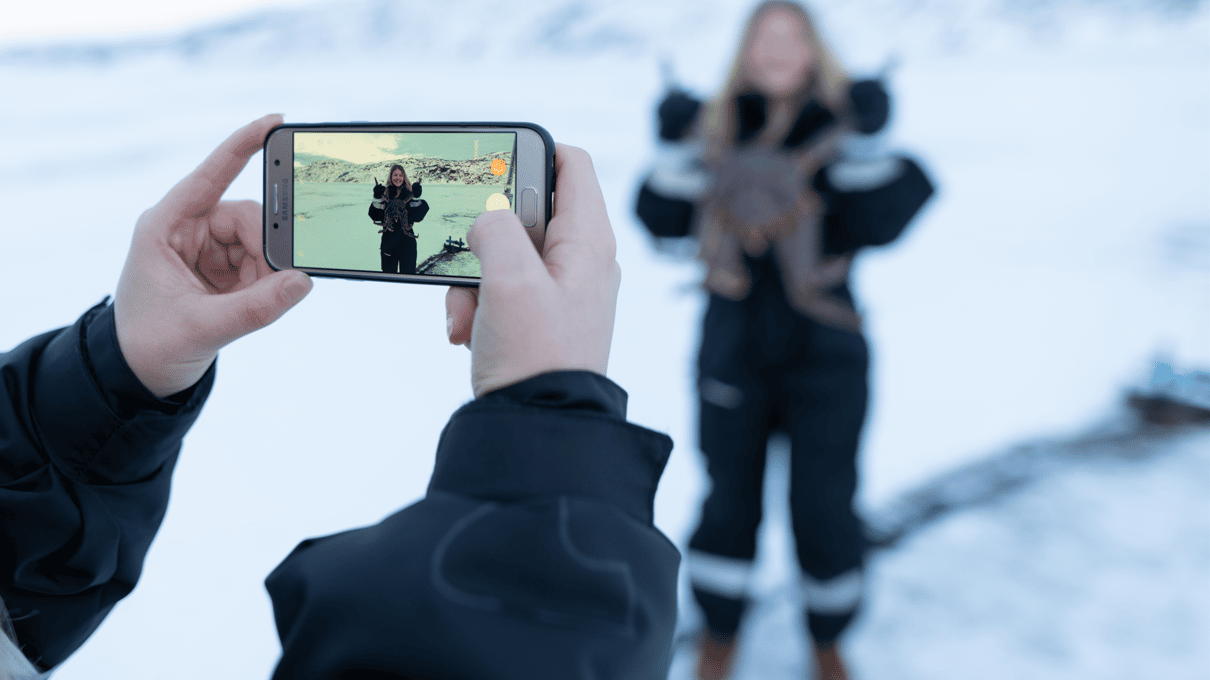
Cold drains phone batteries fast, and a phone can shut down at 30 percent on a winter fjord. Keep it in an inner pocket close to your body and take it out only for the shot.
A wrist strap or a lanyard is a good idea on the boat. A phone dropped over the side of a RIB is gone, and a lost glove on the ice is only a little better.
A small power bank in an inside pocket gives you a second chance after the meal. The guide often takes pictures of the group with the catch, but your own photos depend on a working battery.
A short packing list for each season
Both trips run about 3 hours on GetYourGuide (about 4 on Viator), and both include the crab meal, so you need little else. A small bag is enough.
- Summer: wool or synthetic base layer, fleece, warm hat, sunglasses, waterproof shoes with grip
- Winter: long wool underwear, two thin mid layers, thick socks plus a spare pair, thin liner gloves
- Both seasons: lip balm, a phone strap, a power bank in an inner pocket, money for drinks
Drinks are paid extra at the restaurant on both trips, which our breakdown of what each safari costs covers. Our boat or ice comparison helps you pick a season to match your tolerance for cold. The guide to timing your trip covers light and weather through the year.
Coming off a ship for the afternoon? The cruise stop guide covers what to carry ashore when your luggage stays on board.